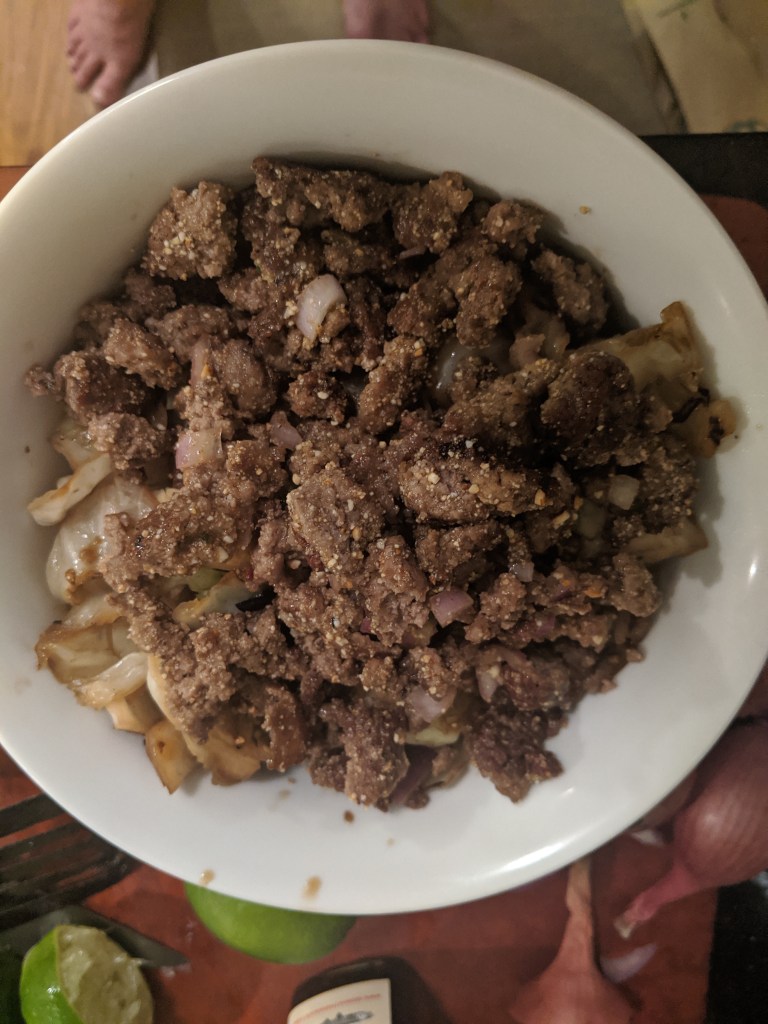
Laab (sometimes spelled “larp”) is a South East Asian dish that’s frequently listed as a salad if you go to Thai restaurants. It’s one of my favorite things. It involves the absolutely magical combination of fresh citrus and fish sauce, which is one of the best things ever. It can be served hot or cold, and spicy or mild. To make laab you’ll need to do a little prep work up front – one of the ingredients is pretty unique, but you can make it. You can get most everything you need at your local grocery store if they have a decent Asian food section.
Traditionally, laab is served on a large lettuce leaf. I like it over stir fried vegetables, so I’m including that in my recipe. I’ve done it for years over stir fried haricot vert (young green beans). Lately I’ve been using cabbage and eggplant. Mostly you’re going to find pork or chicken laab, my go to for my home kitchen is ground pork. You can also do vegetarian laab with tempeh or diced mushrooms (which I haven’t tried yet but shout out to Chip Denman, my University of Maryland IT buddy for suggesting it, it’s on my list to explore). I’ve been doing it lately with ground lamb, which is amazing.
Ingredients:
For the laab:
1 pound ground lamb.
Two shallots chopped fine
Two limes
Good quality fish sauce https://www.amazon.com/gp/product/B00B617XK2/ref=as_li_qf_asin_il_tl?ie=UTF8&tag=foodinnogroue-20&creative=9325&linkCode=as2&creativeASIN=B00B617XK2&linkId=2ba8fd6bcc86472b9a6297e09b6258c3
Thai chilis to taste (I generally use two minced)
Toasted rice powder (see below).
For the stir fry:
One head green cabbage, chopped
One eggplant cut into medium cubes
High heat tolerant oil (peanut, grape seed, or avocado will do nicely).
Soy Sauce
Black pepper
First you’re going to have to make the toasted rice powder. It really helps to have an inexpensive coffee grinder for this. The blade kind, not the burr kind. They’re not great for coffee, but they work really well for spices or toasted rice.
Put a cast iron or non-stick pan on the stove over medium low heat. Add 1/4 cup uncooked white rice (I use basmati because it’s what I always have on hand) and spread it out in a single layer.
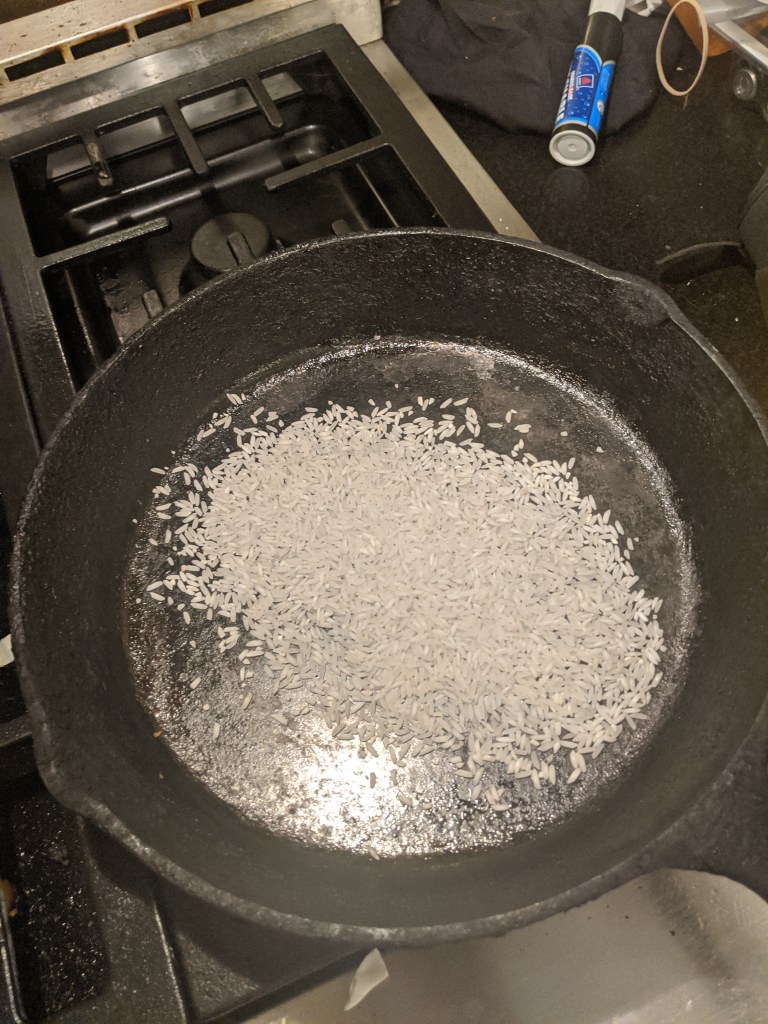
You have to pay somewhat close attention to this. As the rice heats it will brown. Rattle the pan around every so often to shuffle the rice grains. The goal is to get them between golden and dark brown, but not burnt.
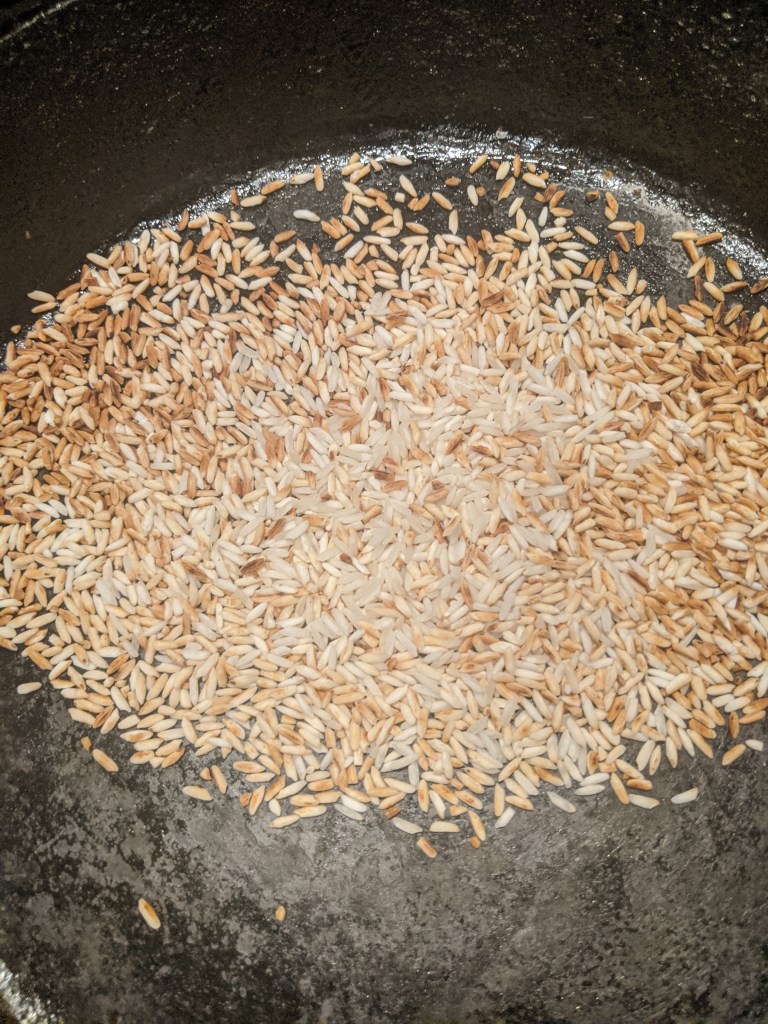
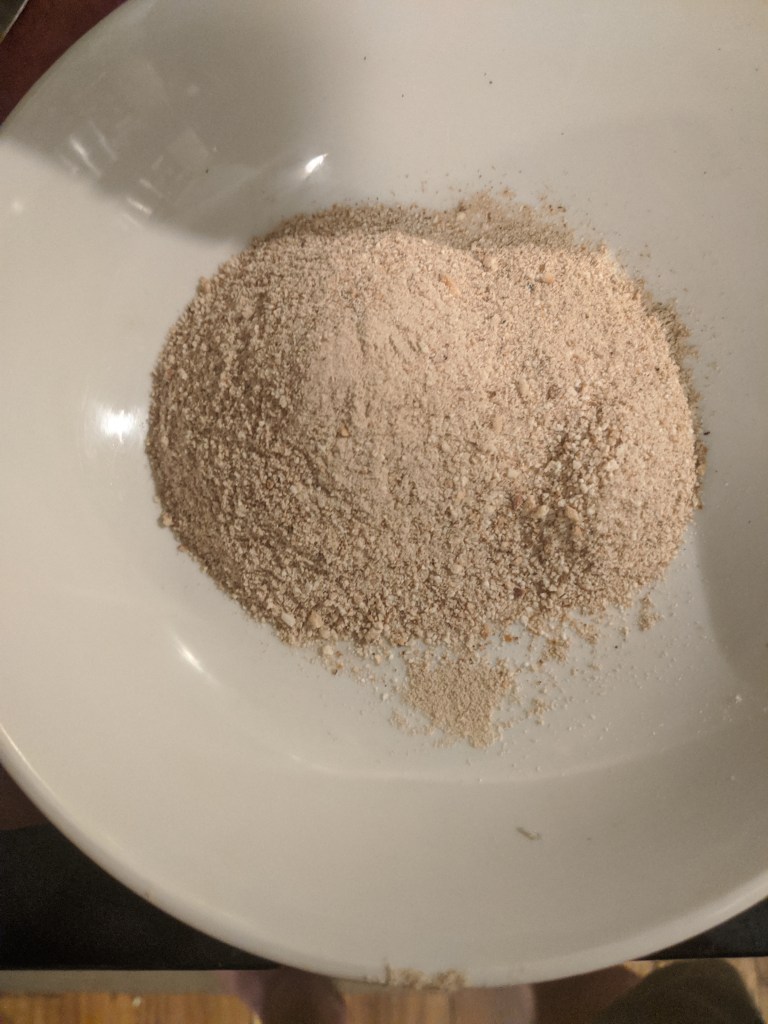
When they get to this point remove the from the heat and pour them into your grinder. Spin them in the grinder until you have a powder, and then set it aside.
Now move on to your vegetables. Heat a wok or large pan on high heat until it’s very hot. Add your oil, and then the eggplant, which takes a while to cook. Stir fry the eggplant until it’s starting to soften and brown. That will take six to eight minutes, then add in the cabbage.
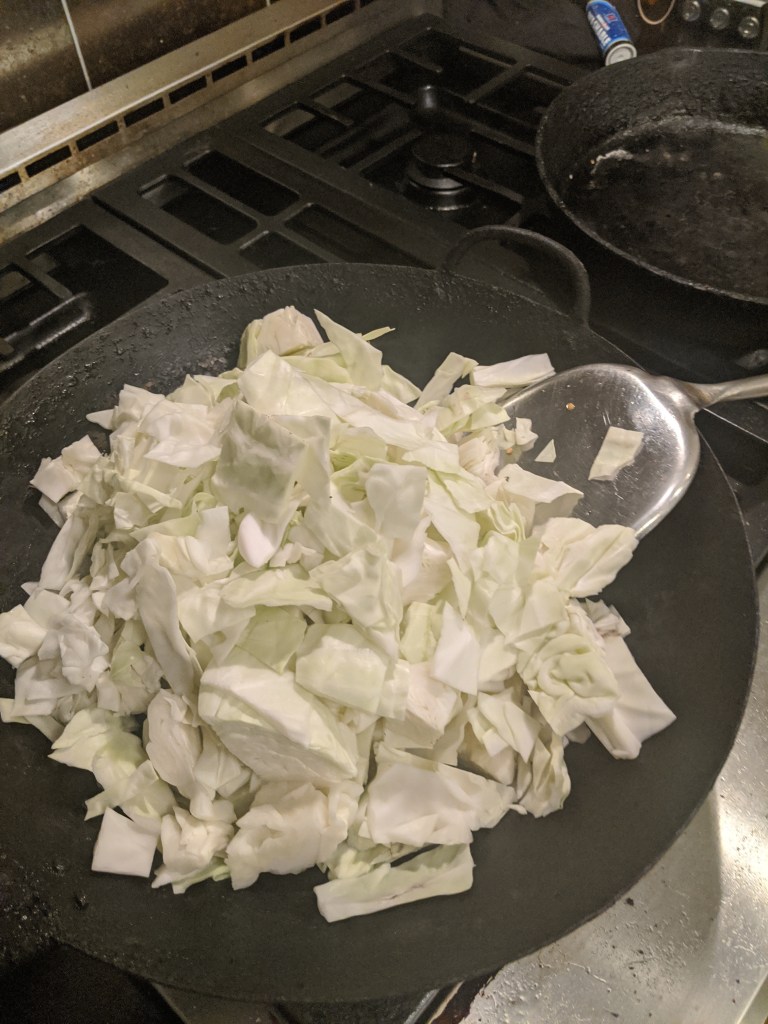
Keep stir frying. Once the cabbage goes from wilting to starting to brown splash in some soy sauce and twist in some black pepper. Keep stir frying until the liquid has cooked out. Set aside.
Now it’s time to make the laab.
Heat a cast iron or non-stick flat pan over high heat. Add your meat and spread it out into a single flat layer.
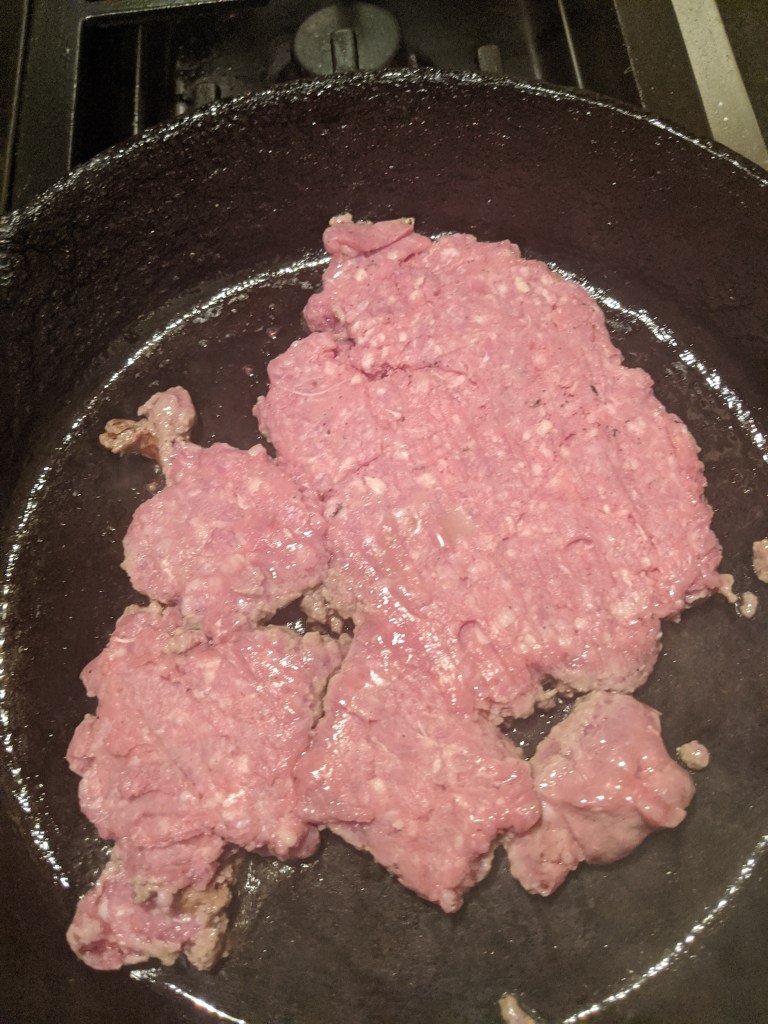
Once you get it spread out leave it alone. We want it to brown and get a little bit crispy. It will stick initially, but be patient. As it browns it will release. When the meat browns on the bottom you can start moving it around to cook it through. Depending on the fat to lean ratio, you might also want to drain off some of the fat.
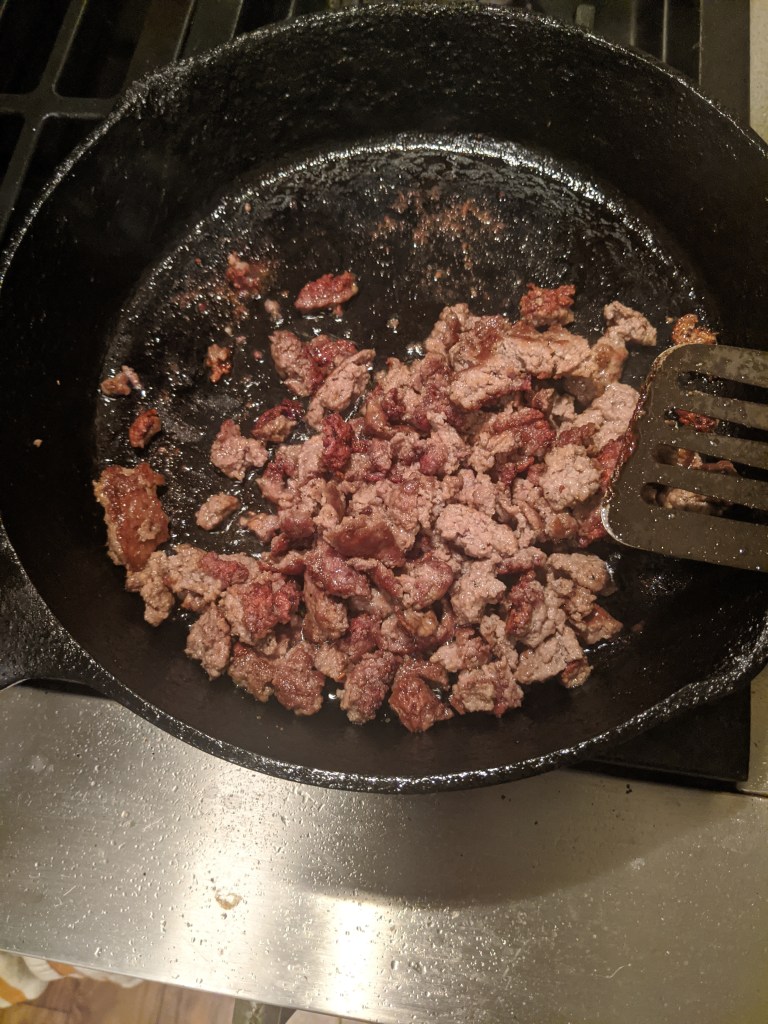
When the meat is thoroughly browned transfer it to a bowl.
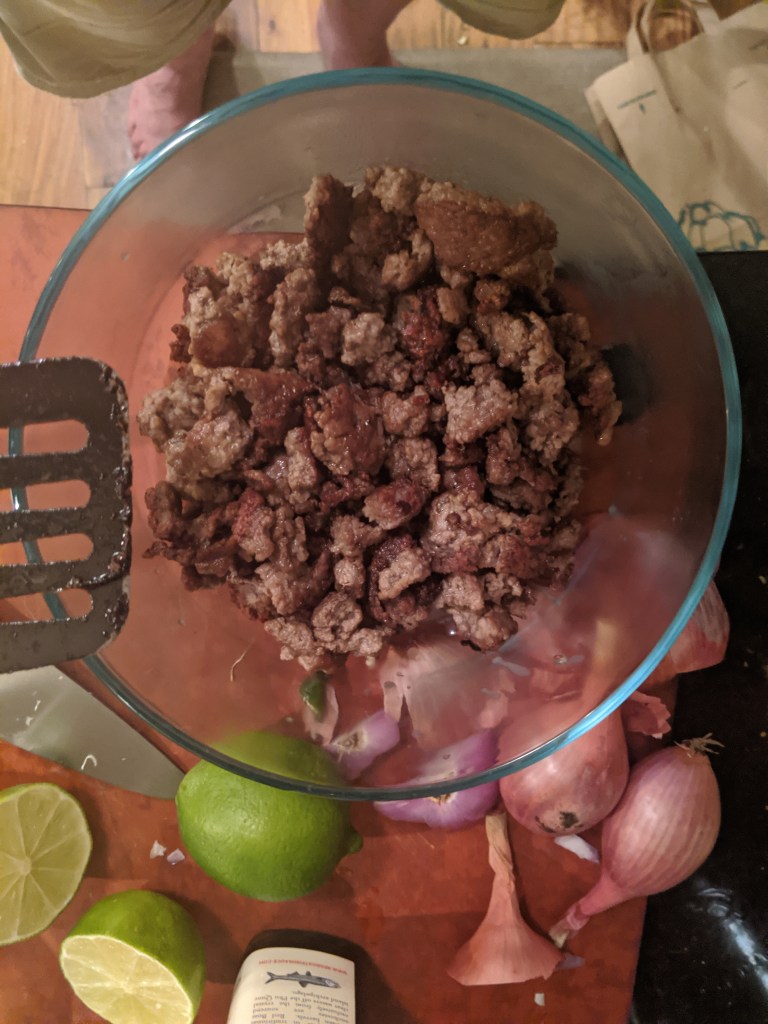
Mix in your shallots and chilis, then squeeze in the juice of both limes. After this your proportions will be to taste.
Add in your fish sauce. Fish sauce can be challenging to American palates. Start conservative and taste as you go along. You should get a hit of the fish sauce aroma as your fork or spoon comes up, you should also get a salty fishy taste that is offset by the citrus. As I noted above, it’s a magical combination. It adds tons of umami to the dish (from Google: Umami represents the taste of the amino acid L-glutamate and 5′-ribonucleotides such as guanosine monophosphate (GMP) and inosine monophosphate (IMP). It can be described as a pleasant “brothy” or “meaty” taste with a long-lasting, mouthwatering and coating sensation over the tongue.).
Once your satisfied with balance of your fish sauce and citrus add in your toasted rice powder. It adds a faint crunch, a bread crumb like texture to the meat, and it will absorb a lot of the liquid and adhere it to the meat. Start small in terms of amount (you won’t be able to remove it if you put in too much) and then add and mix. You don’t want it to be pasty, but you should notice the rice powder in each bite.

When it’s all mixed in, dump a serving onto a bowl full of the stir fried vegetables. A truly wonderful one bowl meal. It tastes even better as cold leftovers the next day.
 Yet Another Food Blog
Would rice flour work instead of making hour own rice powder?
LikeLiked by 1 person
That’s a good question – I’ve never tried it. That said – toasted rice powder really isn’t difficult or time consuming to make, assuming you have the grinder. I’ve done it with a mortar and pestle also. That takes more work, of course, but it isn’t onerous. If you try rice flour please let me know how it goes.
LikeLike