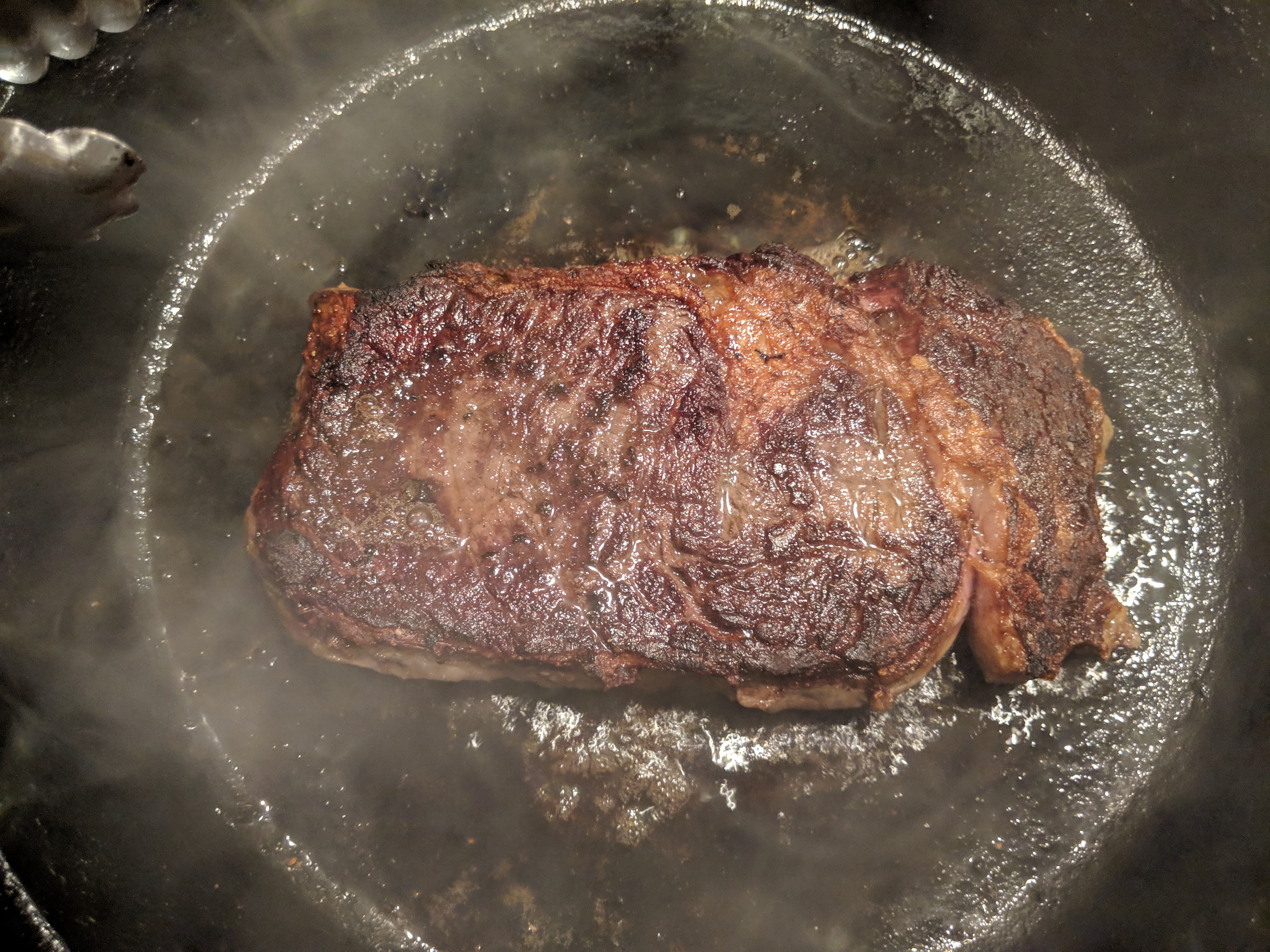
I know that I’ve promised to not front load a pile of narrative in front of the recipe, but this one will be something of the exception to that rule. Read on, you’ll see what I mean and hopefully you’ll forgive me.
KISS – Keep It Simple, Stupid.
Steak (beef in general, really) is one of those things that’s much more about what you buy than it is about how you prepare it. Essentially it comes down to this – buy high quality grass-fed beef, and then keep the preparation simple so that you can taste it.
I’m going to throw out some facts without bothering to paste in links to validate them. Believe me or don’t. You can easily find research that backs up what I’m going to say. You can also easily find research that refutes it. The question isn’t what does the research show, the question is who’s funding the research and what do they want it to show.
Cattle are ruminants. That means that they’re anatomically and evolutionarily constructed to consume and digest grass. The problem with that, from a commercial farming standpoint, is that it takes a long time to get beef cattle to market weight feeding them grass. It takes a lot more space also – they graze. You need a lot of land for them to graze on. So, grass fed beef means a low ratio of animals to space for the farmer. Relative to cattle that are penned and fed grain, I mean. Grass fed is, understandably, much more expensive.
Or you can feed grain to your cattle. Fattens them up much quicker. They get to market much sooner and the whole operation is much more efficient in terms of space usage. Here’s the problem, though.
Cattle are ruminants, they’re not built to have a grain dominant diet. Forcing them to digest grain is, literally, forcing them to mutate. They can be helped along in this process with the introduction of other things – hormone supplements or whatever. But the more of that that happens, the further your cow gets from being the animal that nature and evolution intended it to be. Is that something you want to be eating? It’s not something I want to be eating.
In the middle, by the way, is “grain finished”. That means different things in terms of specific practice and times, but it boils down to those cattle being allowed to graze for the first part of their lives and then, after some period of time, brought the rest of the way to market weight quickly by feeding them grain. It’s more expensive than grain fed, less expensive than grass fed. I try to avoid this also.
Finally, and equally importantly, feeding cattle anything but grass dramatically impacts the flavor of the meat. Actually – “impact” is the wrong word. “Neutralize” is a better word. I’ve been eating grass fed for the past twelve or thirteen years. At this point I can tell by taste if the beef I’m eating is grass fed or grain fed. Grain fed beef just doesn’t taste like anything. It’s a texture only eating experience, which is kind of gross.
Bottom line – buy grass fed beef. If that means eating less beef, eat less beef. Then, assuming we’re talking about steak, cook it as simply as possible. Like this:
Pan Seared Steak
Ingredients:
1 or more grass fed steaks. In this example I used a ~13 oz boneless grass fed ribeye.
Splash of olive oil
Knob of butter
Kosher salt
Fresh ground black pepper
You’ll also need a heat tolerant pan and a long handled spoon.
You’ll note that I haven’t included times in this. I can’t. The cooking time depends on how hot your stove top gets, what kind of pan you’re using, and how thick your steak is. You just have to pay attention to it as it cooks.
I’m making the assumption that the most you’re going to cook this thing is medium rare. If you’re cooking it more than that go back to the ingredient list, and where it says “1 or more grass fed steaks” substitute tree bark, cardboard, or leather scraps. They’ll taste the same and cost less.
Unwrap your steak and throw some kosher salt on it. Leave it sit on the counter while your pan heats up.
Put your pan on high heat on the stove top and get it good and hot.
Swirl just enough olive oil in your pan to coat the bottom and then drop your knob of butter into the center of the pan. It will foam and subside quickly.
Once the butter subsides put your steak in the center of the pan.
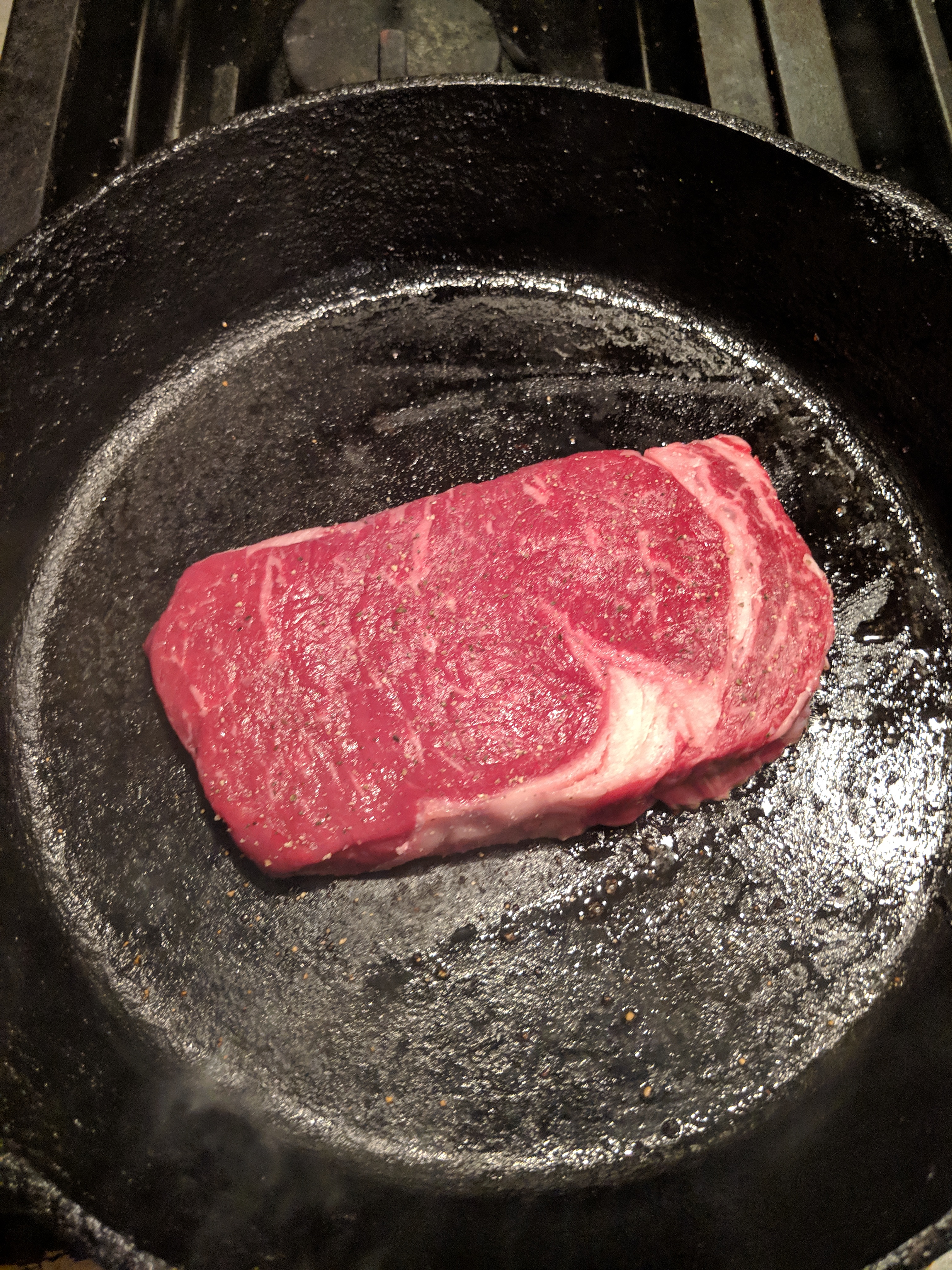
Watch the edges of the meat. When the edges start to discolor you’re getting close. They’ll go from red to grey to brown. When you see brown you move to the next steps:
Grind some black pepper onto the steak.
Tilt the pan so that the accumulated juices collect. Use your long handled spoon to baste the raw side of the steak. You’ll see the meat tighten and slightly discolor.
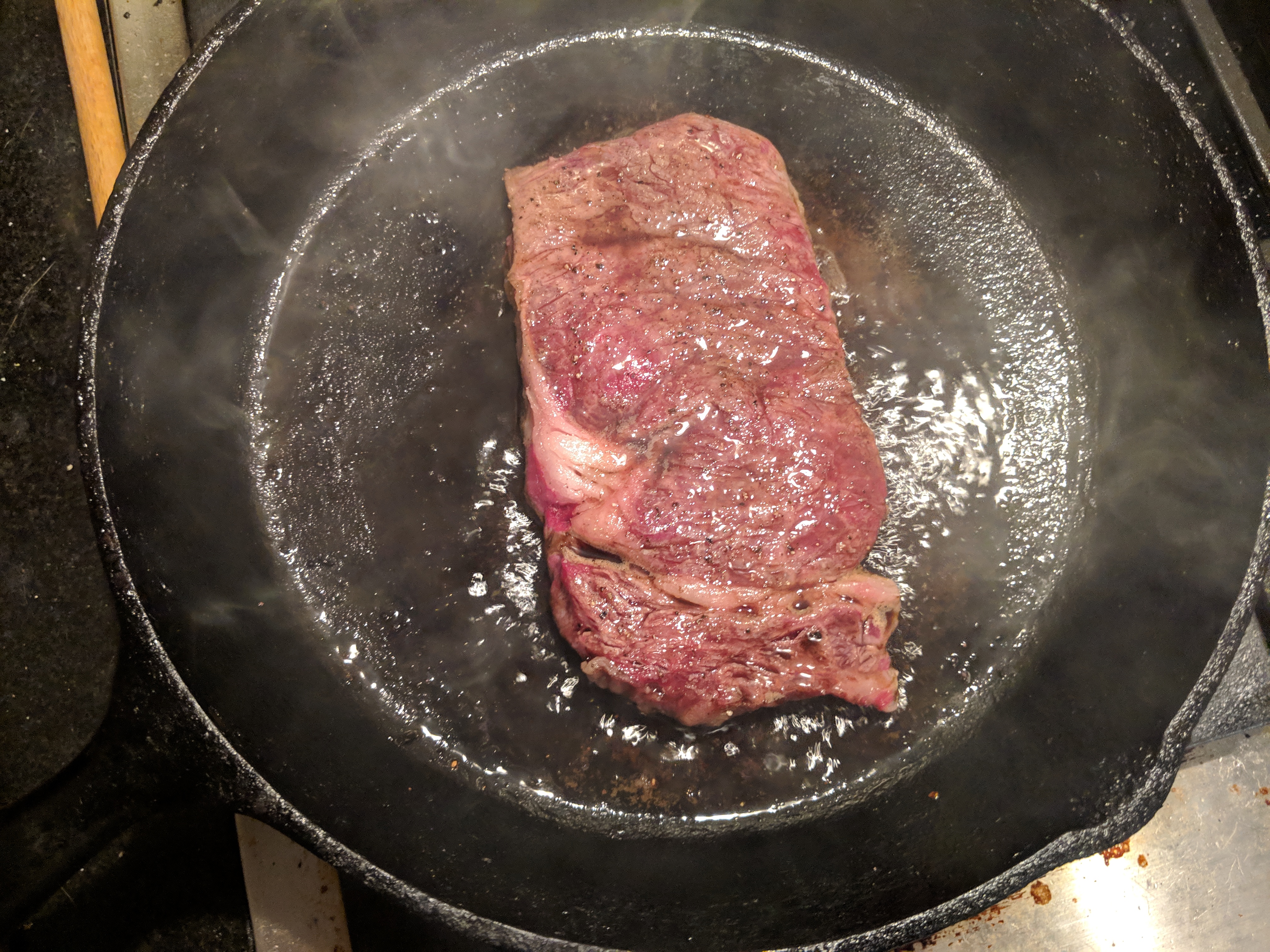
Once you’ve basted the meat turn it over. The down side should be nicely seared with a good crust on it. Let that side go until you see browning creep up around the edges. In the meantime, if the side that’s now up is inconsistently browned you can baste it with the hot pan liquid to further develop the crust.
Once you’re crusted on both sides
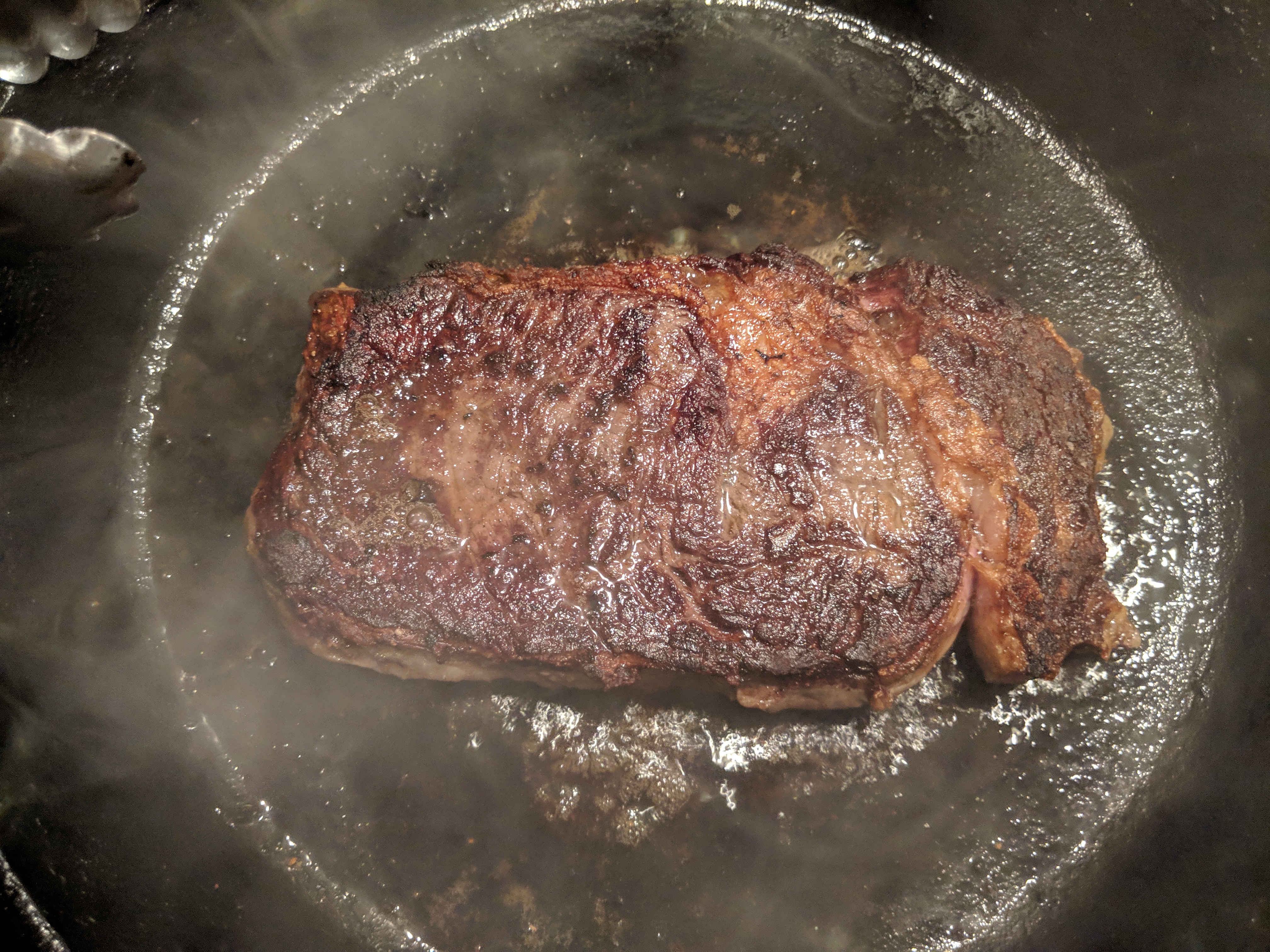
Take the steak out of the pan and put it aside to rest. Tent it with some foil if you want to keep it hot. Let it rest for a minimum of five minutes. It will keep cooking off the heat, and distribute juices more evenly.
You can do all of this on a grill also, by the way. But it’s March in Wisconsin and there’s about a foot of snow on the ground surrounding my grill, so I did the photos for this on my stovetop. If you’re going to do this on a grill, bank the coals to one side and sear the steak directly over them to form the crust on both sides. It will go faster than the stove (assuming your coals are hot and close to the grate) but there’s no way to collect the juices for basting. Once you’ve seared both sides move the meat to the cold side of the grill and close the lid for a few minutes to finish the cooking. Let it rest for five to ten minutes when it’s done.
 Yet Another Food Blog